First published: December 2023 | Updated: 22 February 2026 | By Abdullah Hussein
In the high-stakes environment of oil and gas production, mineral scale is more than a chemical nuisance , it is a significant flow assurance threat that strikes at the heart of asset profitability.
From subsurface formation damage to the total blockage of surface flowlines, the deposition of carbonates, sulfates, and exotic scales (like Lead or Zinc sulfides) imposes a staggering financial burden through expensive workovers and deferred production.
Understanding the Enemy: The Stages of Scale Formation
To effectively combat scale, one must first understand precisely how it forms (Figure 1). It's not a single event, but a five-step process, each presenting a unique opportunity for intervention.
Supersaturation:
This is the thermodynamic driving force for scale. It occurs when the concentration of dissolved scaling ions (like calcium, barium, sulfate, or carbonate) in the produced water exceeds their equilibrium solubility. This can be triggered by changes in temperature, pressure, or pH as fluids travel from the reservoir to the surface. Think of it as a solution that is holding more than it can comfortably contain , it's looking for a reason to precipitate.Nucleation:
Once the solution is supersaturated, ions begin to cluster together, forming minuscule, submicroscopic crystalline seeds called nuclei. This is the critical "birth" phase. These nuclei can form spontaneously in the bulk solution or on a surface like a pipe wall .Crystal Growth:
With stable nuclei formed, they act as a template. More scaling ions from the supersaturated solution migrate to the surface of these nuclei and integrate into the crystal lattice. This is where the microscopic nucleus grows into a macroscopic crystal, rapidly increasing in size.Adhesion:
As crystals grow, they can be transported to, or grow directly on, equipment surfaces. Adhesion is the process where these crystals attach themselves to surfaces like pipe walls, valves, and downhole safety equipment. The strength of this bond determines how tenacious the scale will be.Aging:
Once attached, the scale layer undergoes aging. This involves further crystal growth, cementation, and possible transformation into harder, more adherent mineral phases. An aged scale deposit becomes increasingly difficult to remove, often requiring mechanical intervention or aggressive chemical dissolvers.
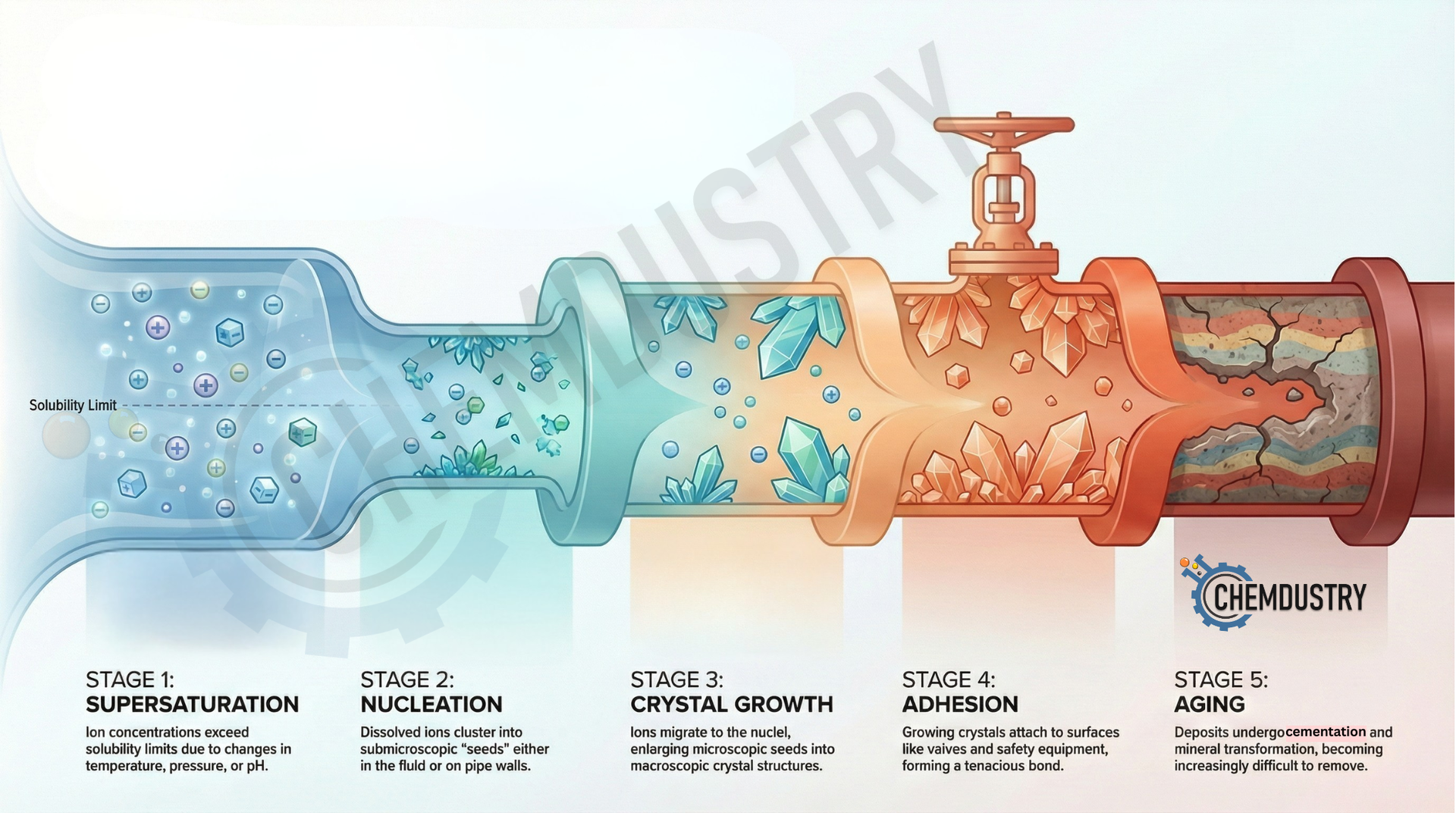
Figure 1: Stages of scale formation
Core Strategies for Scale Mitigation
Mineral scale mitigation is best described across three axes of strategy:
Operational Controls
Chemical Mitigation
Physical / Non-Chemical Methods
1) Operational Controls
Operational measures aim to avoid the conditions under which scaling occurs:
Avoid mixing incompatible waters : By selecting compatible water for injection, or pretreatment of injection water, and improve/modify system design to avoid mixing incompatible streams.
Temperature and Pressure Management : Operating conditions can be adjusted to keep scalants below saturation thresholds.
Limiting Concentration Factors : In recirculating systems (like cooling water), controlled blowdown reduces total dissolved solids and delays scale.
Optimizing Flow Patterns : Increased velocity and turbulence reduce local supersaturation at surfaces, delaying nucleation, and more often scrub the freshly formed scale particles off the equipment surfaces.
These measures don’t chemically prevent scaling, but they can delay or reduce scale if implemented properly.
2) Chemical Mitigation Methods
Chemical mitigation refers to introducing additives that interfere with scale formation — either by preventing precipitation, altering crystal growth, or dissolving scale deposits.
Scale Inhibitors
Scale inhibitors or antiscalants are specialty chemicals added in small concentrations that inhibit crystal nucleation and growth. They achieve this by:
Chelating scaling ions
Disrupting crystal lattice formation
Dispersing micron-sized precipitates to keep them suspended rather than deposited
Common inhibitor chemistries include:
Phosphonates / phosphates
Polymeric chemicals : Polycarboxylate , polysulfonate
Green (biodegradable) polymer formulations
These agents are widely used in industries such as RO/desalination, cooling towers, boilers, and oilfield production.
Green Scale Inhibitors
Growing environmental regulations have driven research into non-toxic, biodegradable inhibitors. Studies have shown organic acids and carbohydrates (like inulin) can reduce scale deposition significantly when co-injected under reservoir conditions, when compared with traditional phosphonate inhibitors.
3) Physical / Non-Chemical Methods
Physical approaches modify either the fluid properties or surface conditions so scale cannot nucleate or adhere easily.
Surface Engineering
Advanced surface coatings and materials can make equipment surfaces non-adhesive to scale. For example, nanoscale lubricated surfaces can reduce calcium carbonate deposition rates by more than 10× compared to untreated surfaces, significantly delaying scale buildup.
Electromagnetic / Magnetic Treatment
Magnetic field treatment aims to change the crystallization behavior of scaling minerals, encouraging formation of less adherent forms of scale. Electromagnetic based technology such as ClearWELL is common in use for mitigating scaling issues in a wide range of wells; naturally flowing, artificial lift , water and gas injection, and HPHT wells—as well as pipelines and surface processing equipment .
Acoustic, electrical, and other technologies
Different devices, are available commercially to prevent scale formation based on different physical signals.
Mechanical Cleaning / Descaling
For existing scale deposits, mechanical cleaning (pigging, hydro-jetting) and chemical descalers (acid washes or specialized dissolvers) are often used. These processes physically remove or chemically dissolve existing scale.
Strategic Intervention: Targeting the Stages of Scale Formation
Every scale mitigation strategy—chemical or physical—is a targeted strike. They work by disrupting the scale lifecycle at its most vulnerable points. By intercepting nucleation, distorting crystal growth, or blocking adhesion, which ultimately prevents scale formation or at least attenuates their effects (Figure 2).
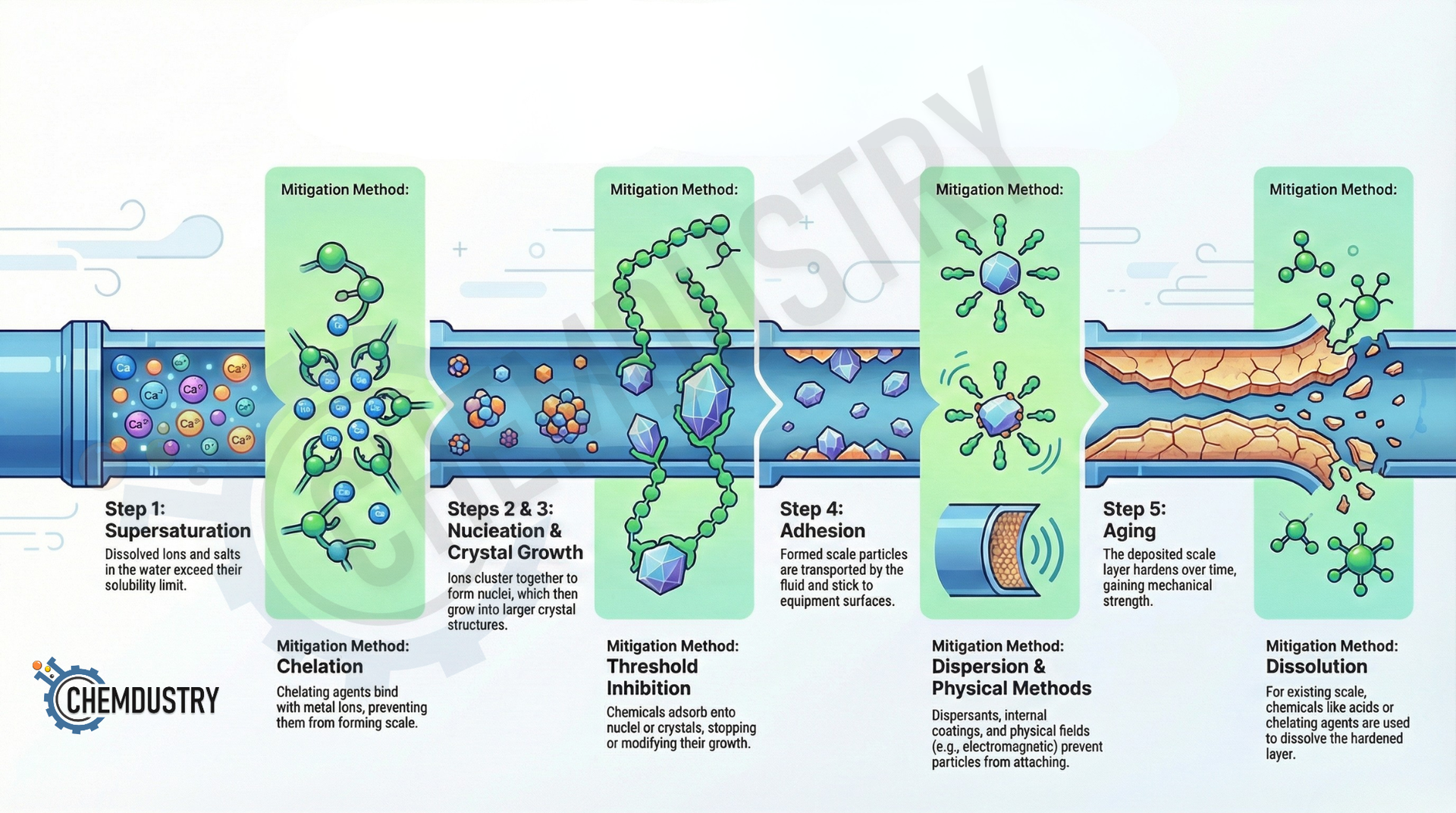
Figure 2: Scale formation steps and their counter mitigation steps
Chemical Mitigation Methods
Chemical control remains the primary route for mineral scale management in oil and gas fields.
1. Chelation : Targeting Supersaturation
Chelating agents (chelants) are molecules that bind strongly to metal cations such as Ca²⁺, Ba²⁺, and Fe²⁺/Fe³⁺ in solution (Figure 3).
Mechanism: The chelant forms a stable complex with the metal ion, reducing the free ion concentration and preventing it from reacting with counter-ions (e.g., CO₃²⁻, SO₄²⁻) to form solid scale.
Stoichiometry: Chelants are dosed roughly in stoichiometric proportion to the scaling ions because each chelant molecule complexes a defined number of metal ions.
Common chemistries: Polyaminocarboxylate chelants such as EDTA and DTPA are widely used in oilfield applications, particularly for iron and carbonate scales.
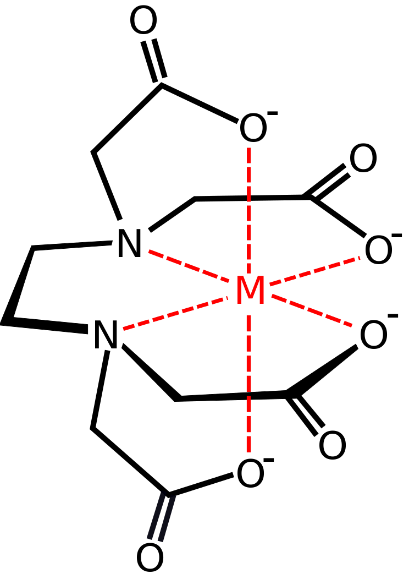
Figure 3: EDTA chelation with metal ions (source: wikipedia)
Chelation is especially valuable during clean-up and remediation, or in systems where ionic strength and pH make threshold inhibitors less effective.
2. Nucleation Inhibition / Sequestration
Nucleation inhibitors are often referred to as threshold scale inhibitors because they work at very low concentrations (few ppm) yet prevent bulk precipitation.
Mechanism: Inhibitor molecules adsorb onto early-stage nuclei or complex with ions in solution, delaying or preventing the formation of stable nuclei.
Dosage: Sub-stoichiometric; small amounts protect large volumes of water, which is key for cost-effective continuous injection.
This mechanism is central to continuous scale inhibitor injection and squeeze treatments in wells.
3. Crystal Growth Modification
Crystal modifiers alter the morphology and physical properties of forming scale crystals.
Mechanism: Inhibitor molecules adsorb onto active growth sites on the crystal surface, typically covering a small fraction (e.g., 3–5%) of the crystal area.
Result: Distorted, irregular, or needle-like crystals form, which grow more slowly, have weaker mechanical strength, and tend not to interlock into hard, adherent deposits (Figure 4).
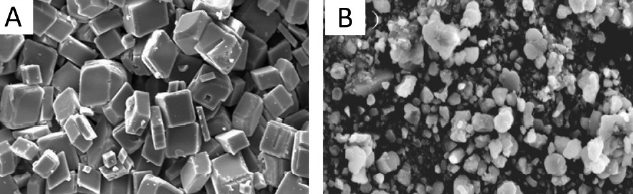
Figure 4: (A) CaCO3 scale crystals without scale inhibitors (B) modified CaCO3 crystals in presence of scale inhibitor. source Zuo et al. 2020, Crystals. 2020; 10(5):406.
Studies on CaCO₃, for example, show that specific polymeric inhibitors transform well-defined rhombohedral crystals into fragmented, less ordered structures that remain more easily suspended or removed.
4. Dispersion: Interfering with Adhesion
Dispersant-type scale inhibitors are designed to keep solid particles suspended rather than allowing them to settle and stick to surfaces.
Mechanism:
Provide electrostatic repulsion between particles, preventing agglomeration.
Form a thin film on metal surfaces, reducing the tendency of crystals to adhere (a “non-stick” effect).
Outcome: Scale may form in the bulk fluid as fine particles, but is carried out of the system instead of forming a coherent deposit on tubing, lines, or equipment.
This mechanism is especially useful in systems with high suspended solids or where some bulk precipitation is inevitable but manageable.
5. Dissolution : Removing Existing Scale
Once a hard scale layer has formed, prevention alone is no longer sufficient; removal is required.
Acids: Organic and inorganic acids can dissolve carbonate scales effectively , they can also be used for some sulfide scale dissolution. Acid cleaning jobs require optimum design to achieve the best efficiency, while avoiding the side effects of acid such as corrosivity, CO2 and H2S release, and secondary precipitations.
Chelants: High-strength chelant treatments (e.g., hot EDTA-based formulations) can dissolve sulfate scales and carbonate deposits where acids are less effective or risky.
Other additives: Oxidizing or non-oxidizing biocides may help when microbiologically influenced deposition is involved, especially in mixed scale/biofilm systems. They can also be used to dissolve sulfide scales effectively.
Dissolution treatments are typically applied via wellbore treatments, coiled-tubing cleanouts, or circulation through surface equipment.
Non-Chemical Mitigation Methods
Chemical treatment is not always sufficient or optimal on its own. Non-chemical methods provide additional tools that mainly target adhesion and deposition.
1. Internal Coatings
Internal coatings are applied to steel surfaces in pipelines, flowlines, and sometimes downhole tubulars.
Mechanism: Coatings provide a barrier between the metal surface and the scaling fluid, reducing sites for nucleation and adhesion.
Effect: Even if crystals form in the bulk, they are less likely to attach and consolidate, so they can be carried with the flow and removed downstream.
Coatings can also provide dual protection against both corrosion and scale, but they require careful selection and application to withstand temperature, pressure, and chemical environment.
2. Physical Methods (Ultrasonic, Magnetic, Electromagnetic)
A number of physical devices have been developed to reduce scale deposition without chemical addition.
Common approaches include:
Ultrasonic systems: Apply high-frequency vibrations locally, promoting micro-turbulence or cavitation that interferes with crystal growth and adhesion.
Magnetic and electromagnetic devices: Expose flowing water to magnetic or electromagnetic fields, with claimed effects on crystal nucleation, growth habit, or surface charge, thereby encouraging non-adherent, dispersed crystals.
While the exact mechanisms are still debated and performance can be system-specific, these methods aim to keep scale as suspended particles, similar in outcome to dispersant chemistry (Figure 5).
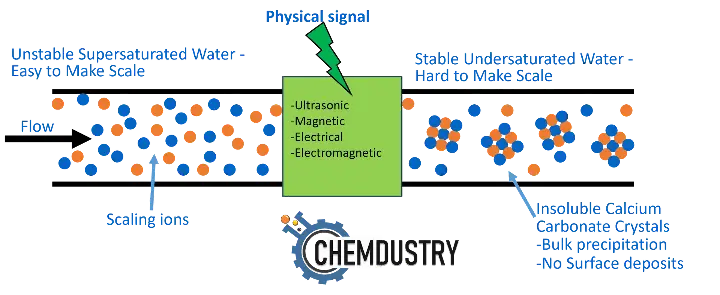 Figure 5: Basics of nonchemical scale inhibition methods
When to Use Which Method
In practice, scale management in oil and gas operations is rarely “chemical vs non-chemical”; it is usually an integrated strategy.
Selection depends on:
Severity and type of scale (carbonate vs sulfate vs mixed).
Location of deposition risk (near-wellbore, tubing, surface equipment, topsides).
System conditions (temperature, pressure, TDS, pH, water cut, flow regime).
Operational constraints (accessibility for treatments, retrofit options).
Economics and environmental/regulatory requirements.
A robust strategy might combine:
Continuous injection or squeeze of a threshold inhibitor to prevent formation.
Dispersant or crystal modifier functions to keep any formed solids non-adherent.
Coatings in critical lines to reduce deposition.
Periodic dissolution treatments to remove any residual scale and reset the system.
How to craft a winning scale management strategy
An effective scale management strategy is a holistic, life-of-well plan that integrates several key steps (Figure 6).
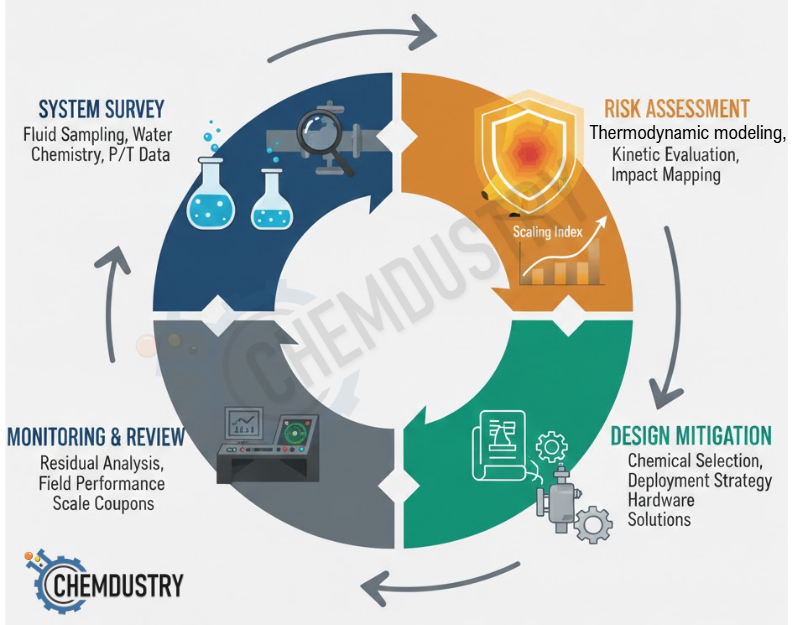
Figure 6: Key steps in scale management strategy
System Survey
Know your system before you treat it: Audit the field to collect baseline water chemistry, pressure/temperature profiles, and historical failure data.
Operational mapping: Identify all fluid flow paths and equipment to locate potential "hot zones" for deposition.
Risk Assessment
Quantify the threat level: Use thermodynamic modeling to calculate the Scaling Index (SI) and kinetic studies to predict the speed of buildup.
Criticality ranking: Evaluate the economic and safety impact of scale at each production stage to prioritize your resources.
Design Mitigation
Tailored engineered solutions: Select the optimal chemical inhibitors through bottle tests and dynamic tube blocking tests.
Deployment strategy: Finalize the application method—whether continuous injection, squeeze treatments, or hardware-based mechanical solutions.
Monitoring & Review
Close the loop with real-time feedback: Track inhibitor residuals, use scale coupons, and monitor production data to validate performance.
Continuous optimization: Feed field data back into the original models to adjust dosages and refine the strategy for long-term flow assurance.
Well, with what we've covered in this article—a comprehensive look at how chemical and physical methods precisely target each stage of the scale lifecycle—you now have a solid understanding of the weapons available in the fight against deposition. In our next article, we'll shift focus from the cure to the prediction, diving deep into scale risk assessment: the critical process of forecasting where, when, and what type of scale will strike before it ever has a chance to form.
Useful resources :
- Flow assurance solids in oil and gas fields
- Essentials of flow assurance solids in oil and gas operations