
12 September 2024 | By Abdullah Hussein
Various types of sulfide scales commonly form in oil and gas production systems. These scales are notorious for their complex nature and damaging effects. Common sulfide scale compounds include iron sulfide, zinc sulfide, and lead sulfide, each existing in multiple phases and polymorphs (Fig.1).
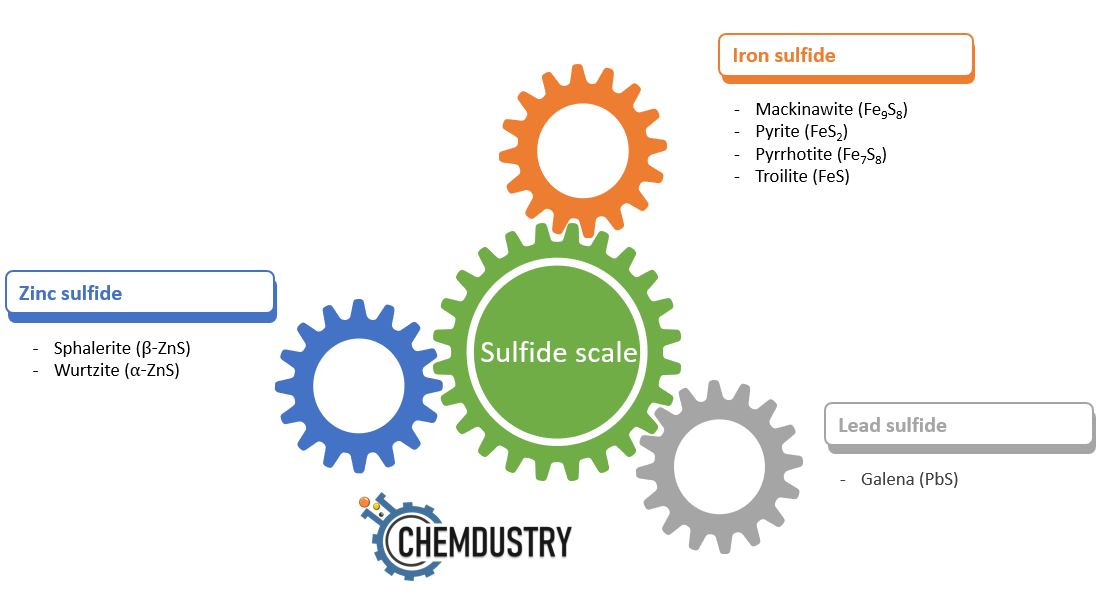
Fig. 1: Examples of sulfide scales that usually found in oil and gas fields.
These scales can cause severe damages to the production system, including :
- Flow restrictions and blockages (Fig. 2)
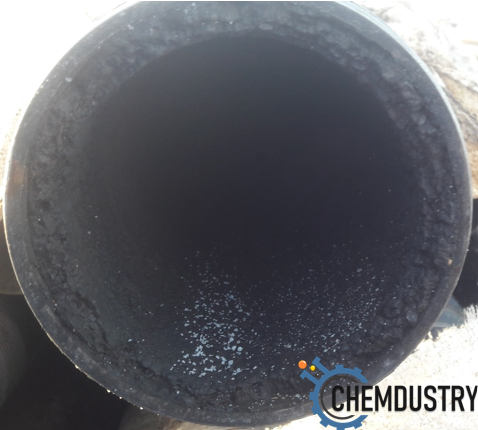
Fig.2: Example of sulfide scaling in a production tubing
-
Corrosion issues: Sulfide scales can accelerate corrosion kinetics, induce under-deposit corrosion (UDC), and cause other localized corrosion damage.
- Phase separation problems: Sulfide scale particles are known to stabilize emulsions due to their very fine size and wettability, as they tend to migrate to the O/W interface and stabilize emulsions.
-
HSE hazards: Pyrophoric iron sulfide can auto-ignite upon exposure to air, posing serious safety risks.
-
Challenges during removal: Acid-based treatments are commonly used to dissolve sulfide scales, but they generate H₂S, promote corrosion, and may be ineffective against older, thicker, or more complex deposits.
-
Complex chemistry: For example, iron sulfides alone exist in nine types with varying Fe/S ratios, making their behavior difficult to predict.
-
Risk assessment complexity: Factors such as water chemistry, acid gas concentrations/partial pressures, bacterial activity, and other operational parameters make sulfide scale prediction challenging. However, emerging prediction models are showing promising results.
Sulfide scale risk assessment :
This requires comprehensive data collection on fluid chemistry and acid gas concentrations in both the water and gas phases to model sulfide scale potential using prediction software. Additionally, bacterial activity must be assessed to determine its contribution to scale formation. Corrosion data, along with current and historical system performance data, are also essential for accurate analysis.
Sulfide scale prevention methods
- Scale inhibitors
Various inhibitors are effective against sulfide scales. In complex scenarios, a combination of inhibitors may be required, especially when sulfide scales co-precipitate with other scales such as sulfates.
- Dispersants
These chemicals disperse sulfide particles, preventing accumulation on pipe surfaces.
- Internal coatings
These are used to prevent sulfide scale accumulation on the pipe wall.
- H2S scavengers
These chemicals are used to control the high H2S concentrations in the produced fluids, thus preventing sour corrosion and also sulfide scaling.
- Biocides
Targeting sulfate-reducing bacteria (SRB) and other microbes, biocides reduce H₂S generation and the resulting sulfide scaling.
- Filtration systems.
Filtration units (Fig. 3) are installed in gas systems to remove fine particles such as black powder—a mixture of iron oxides and iron sulfides.
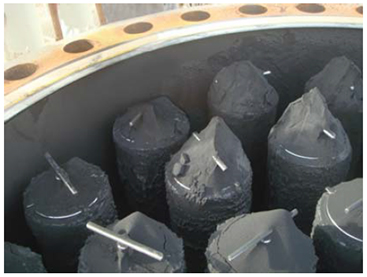
Fig.3: Filtrations system with black powder accumulations (photo courtesy pall.com)
- Other non-chemical methods
Sulfide scale removal methods :
Acids:
Pros : fast acting , cheap, efficient.
Cons : H2S generation, corrosive, secondary precipitation, multiple additives are required (corrosion inhibitors, Fe-sequestrants, H2S scavengers, etc.) , may not dissolve some sulfide types such as pyrite.
Chelating agents:
Pros : cheap, safe (noncorrosive), efficient if the right formulation and enough soaking time are given.
Cons: slow acting, can’t dissolve some types.
Biocides: (THPS, acrolein, KmnO4, etc).
Pros: very efficient (if formulated properly) , fair price, generate less or no H2S.
Cons: require enough soaking time, some of them require High temperature, corrosive , some of them are expensive.
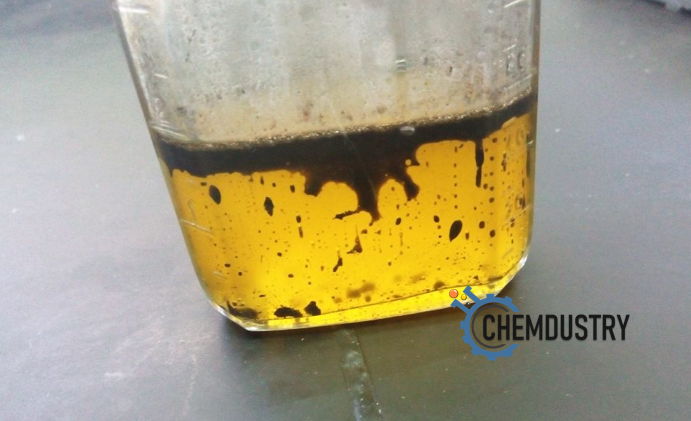
Fig.4: Sulfide scale dissolution using THPS biocide.
Oxidizers :
Pros : efficient, no H2S generation, some are noncorrosive.
Cons : some are corrosive, expensive.
Polymeric dissolvers:
Pros: very efficient, safe, no H2S,
Cons: expensive
Reference :
- Hussein (2023), Essentials of Flow Assurance Solids in Oil and Gas Operations, Elsevier